2026-11-20 ·
Recognizing Hail Damage on Roofs in Cass County
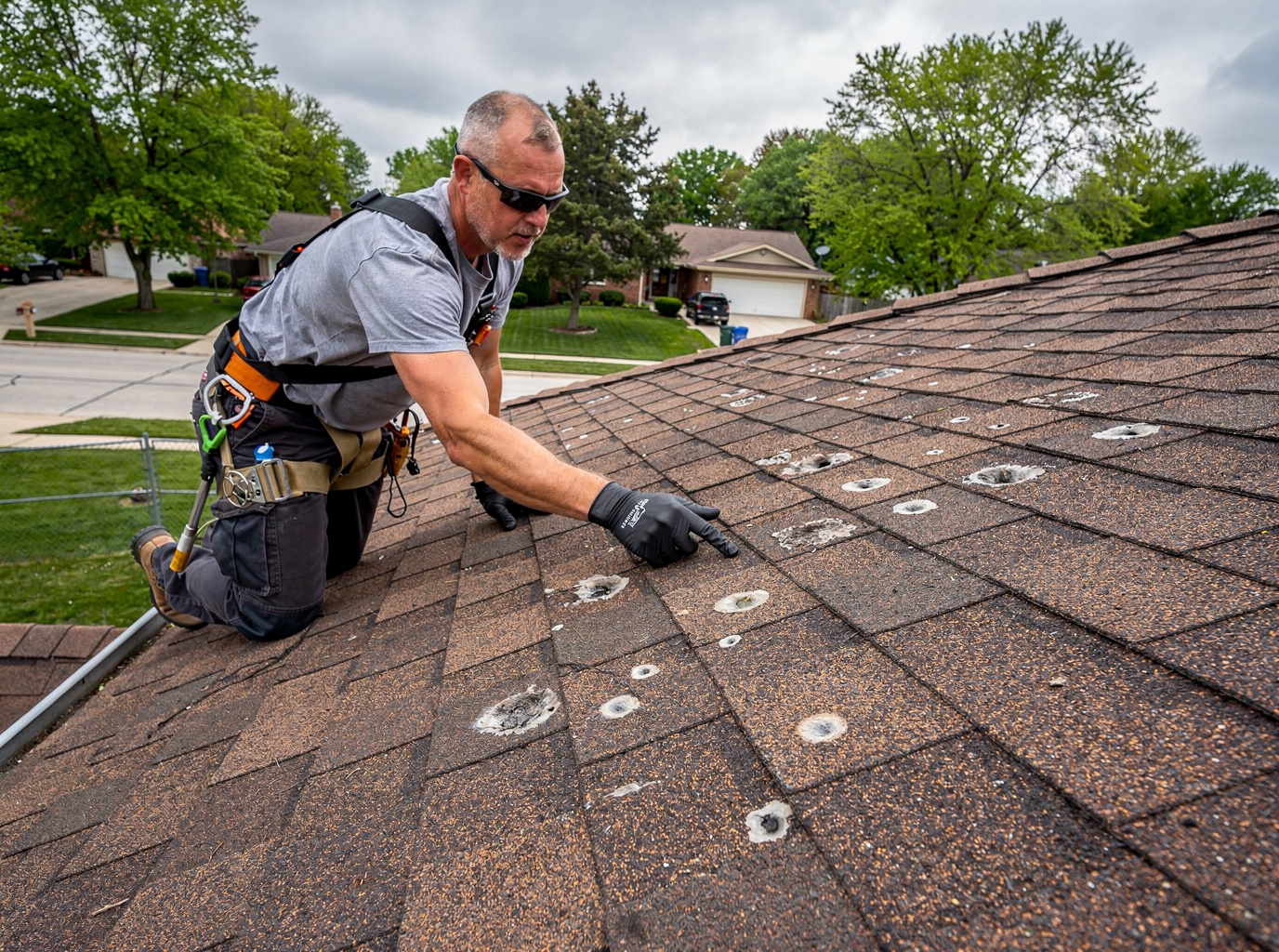
Hail damage on roofs in Cass County shows up first as random dents measuring 1/4 inch to 1 inch across on asphalt shingles, paired with dark spots where granules have been knocked loose and the underlying felt begins to weather faster in hot summer humidity.
Visible Indicators on Asphalt Shingles
Asphalt shingles cover most homes built before 1990 around the Cass County Courthouse square and in Linden neighborhoods. After a hail event, walk the roof or inspect from a ladder on a clear day and look for bruising where the mat is crushed but the surface may still look intact from the ground. Granule shedding leaves bald patches that collect in gutters within weeks, while cracked or missing tabs expose the roof deck to the frequent afternoon thunderstorms that follow hail in this region. Check ridge caps and valleys first because hail often concentrates impact there. Older three-tab shingles common on 1960s–1980s houses dent more readily than modern laminated products, so note the shingle type before deciding next steps. If you see these patterns across multiple slopes facing the same direction as the storm path, document them with photos that include the Cass County Courthouse as a reference point for orientation.
Checking Metal Roofs and Other Materials
Metal roofs on outbuildings and some newer Linden homes show hail strikes as circular deformations or chipped paint rather than granule loss. Run a gloved hand over the panels to feel for dimples; even small ones can start rust spots within one humid summer season if the protective coating is broken. Flashing around chimneys and skylights often receives the first hits because it sits higher. On wood shake or tile roofs, which appear on scattered properties near Atlanta, look for split shakes or cracked tiles that allow water intrusion during the next heavy rain. These materials expand and contract more in the temperature swings between hot days and cooler nights typical here, so small hail cracks widen faster than they would in drier climates.
How Local Weather Patterns Speed Up Damage
Cass County’s humid subtropical conditions mean hail rarely falls alone; it arrives with high winds and heavy rain that drive water under loosened shingles immediately. Once granules are gone, the remaining asphalt absorbs moisture and begins to blister within 8–12 weeks of summer heat, turning minor dents into active leaks around the courthouse area where mature trees drop limbs that compound the problem. Homeowners near Atlanta report that south-facing slopes suffer more because they face the prevailing storm direction and receive direct afternoon sun afterward. Soil in the region stays moist much of the year, so any roof leak quickly saturates attic insulation and leads to ceiling stains within one season rather than years.
Steps to Document and Assess Damage
Photograph every slope from ground level and close-up at dawn when light is even, then note the date and time of the storm if known. Measure a few sample dents and mark their locations on a simple sketch of the roof. Compare untouched areas such as under eaves to confirm the pattern is weather-related rather than foot traffic. Schedule a roof inspection once you have clear photos so a contractor can verify whether the underlayment remains sound. If leaks appear, storm damage roof repair can often restore sections without full replacement, especially on homes where only 20–30 percent of the surface shows impact.
Planning Next Steps After Identification
When more than one slope shows widespread granule loss or multiple leaks develop, review the article on budgeting for asphalt shingle replacement in Linden to understand material and labor ranges before summer heat returns. Keep records of all damage for insurance purposes and avoid walking the roof again until a professional assesses structural integrity. Linden Roofing operates Mon–Fri 8am–6pm and Sat–Sun 9am–2pm to answer questions about observed conditions.